Rated
4.4
with
6,461
reviews
Answer paid surveys, play games, or watch videos to redeem free rewards.
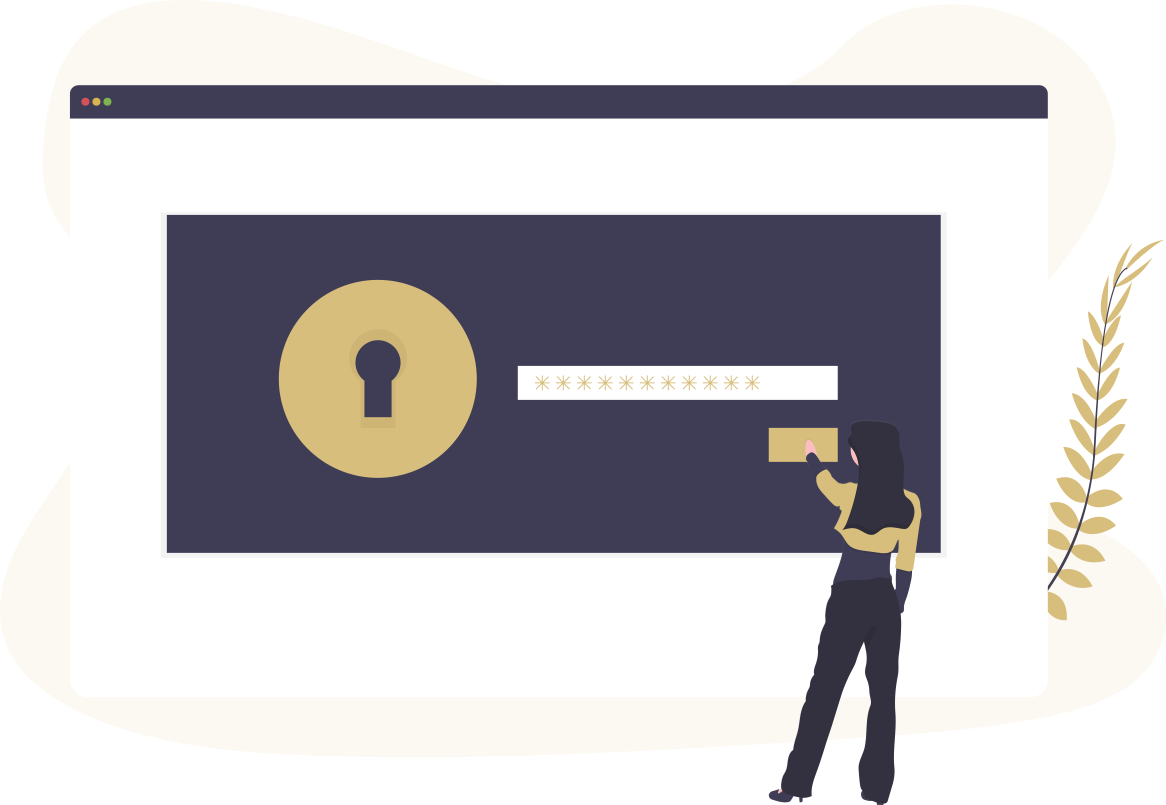
No extra registration needed, you can immediately sign up to our platform with your existing social media accounts.
We support authentication through Google, Facebook, Twitter, Discord, and Steam.
Prefer to sign up with your email address and password? No problem, we got you covered!
Once you registered your account, you can start earning points.
Simply answer paid surveys, play games, watch videos, or test software.
We offer a variety of established earning methods, so you'll easily find something that suits you.
After collecting enough points, it's time to redeem your Paysafecards!
We'll make sure to deliver your reward within 24 hours.
Our shop contains a whole bunch of other rewards too,
just in case you're interested in something else than Paysafecards.
3.4M
$8.1M
380
23.1M
The Frankfurt School’s warning about the culture industry was not paranoid—it was premature. We now live in its fulfillment, but with a twist: the audience has been integrated as unpaid labor (likes, shares, data generation). The path forward is not Luddism; media abolition is impossible and undesirable. Instead, it requires —not just the ability to identify bias, but the cognitive capacity to decouple one’s identity from algorithmic suggestion and to distinguish between emotional satisfaction and factual truth.
The 2010s saw the rise of streaming services, which have had a profound impact on the entertainment industry. Netflix, launched in 1997, was one of the first streaming services to gain popularity. However, it wasn't until the 2010s that streaming services like Hulu, Amazon Prime, and Disney+ became mainstream. These services have changed the way we consume entertainment, providing on-demand access to a vast library of content.
: Use sites like Rotten Tomatoes or Metacritic to find high-quality content across film and gaming.
For decades, popular media was defined by "appointment viewing"—radio shows, cinema, and linear television that dictated when and where an audience could engage. The digital revolution dismantled this structure, replacing it with the "on-demand" model. Streaming giants like Netflix and Spotify have shifted the power dynamic to the consumer, fostering a culture of binge-watching and personalized algorithms. This shift has turned media consumption into a highly individualized experience, where two people in the same house may live in entirely different cultural worlds based on their digital feeds. The Rise of User-Generated Media
Here are a few ways to use the text "entertainment content and popular media" depending on your specific needs: 📱 For a Professional Bio or Portfolio "Specializing in the analysis of entertainment content and popular media
(via headsets like Apple Vision Pro) promise to turn popular media into an immersive environment. Instead of watching a basketball game on a screen, you will sit "courtside" in a virtual arena with your friends’ avatars. This spatial shift will turn entertainment content from a rectangle you look at into a world you live inside .

The Frankfurt School’s warning about the culture industry was not paranoid—it was premature. We now live in its fulfillment, but with a twist: the audience has been integrated as unpaid labor (likes, shares, data generation). The path forward is not Luddism; media abolition is impossible and undesirable. Instead, it requires —not just the ability to identify bias, but the cognitive capacity to decouple one’s identity from algorithmic suggestion and to distinguish between emotional satisfaction and factual truth.
The 2010s saw the rise of streaming services, which have had a profound impact on the entertainment industry. Netflix, launched in 1997, was one of the first streaming services to gain popularity. However, it wasn't until the 2010s that streaming services like Hulu, Amazon Prime, and Disney+ became mainstream. These services have changed the way we consume entertainment, providing on-demand access to a vast library of content. hot+japanese+teen+sex+with+neighbour+xxx+96+jav+free
: Use sites like Rotten Tomatoes or Metacritic to find high-quality content across film and gaming. The Frankfurt School’s warning about the culture industry
For decades, popular media was defined by "appointment viewing"—radio shows, cinema, and linear television that dictated when and where an audience could engage. The digital revolution dismantled this structure, replacing it with the "on-demand" model. Streaming giants like Netflix and Spotify have shifted the power dynamic to the consumer, fostering a culture of binge-watching and personalized algorithms. This shift has turned media consumption into a highly individualized experience, where two people in the same house may live in entirely different cultural worlds based on their digital feeds. The Rise of User-Generated Media Instead, it requires —not just the ability to
Here are a few ways to use the text "entertainment content and popular media" depending on your specific needs: 📱 For a Professional Bio or Portfolio "Specializing in the analysis of entertainment content and popular media
(via headsets like Apple Vision Pro) promise to turn popular media into an immersive environment. Instead of watching a basketball game on a screen, you will sit "courtside" in a virtual arena with your friends’ avatars. This spatial shift will turn entertainment content from a rectangle you look at into a world you live inside .