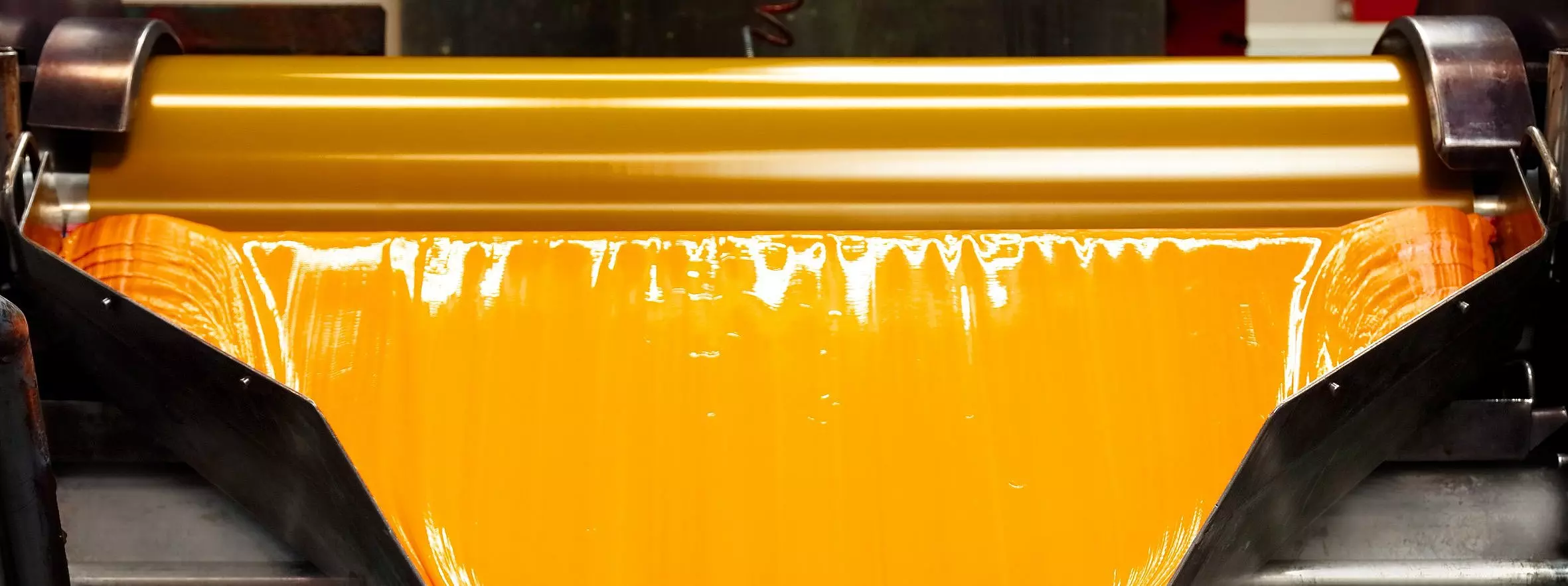
Colors are passion, emotions and personality. At Siegwerk, inks and coatings are our specialty and we use color to bring the packaging and products of our customers to life.
Some important events in the history of the transgender community and LGBTQ culture include:
One of the most iconic examples of transgender influence on LGBTQ culture is the ball culture of the 1970s and 1980s. Ball culture, which originated in African American and Latino communities, provided a space for LGBTQ individuals to express themselves through fashion, dance, and performance. Transgender individuals, particularly those of color, played a central role in the development of ball culture, which has since been recognized as a vital part of LGBTQ cultural heritage.
However, challenges persist, and the transgender community continues to face significant barriers to equality. According to the Human Rights Campaign, transgender individuals are more than four times as likely to experience poverty, and are disproportionately affected by violence and harassment. teen shemale gallery
Historically, the modern LGBTQ rights movement was galvanized by transgender and gender-nonconforming individuals. The often-cited origin point, the 1969 Stonewall Uprising in New York City, was led by street activists and drag queens, many of whom were trans women of color, such as Marsha P. Johnson and Sylvia Rivera. These figures resisted police brutality not for the right to a quiet, assimilated life, but for the right to exist openly in their full, defiant expression. In this crucible, the boundaries between sexual orientation and gender identity were porous; to be a gay man in effeminate dress or a lesbian in masculine attire was to challenge the very binary gender system that oppressed trans people. Thus, early LGBTQ culture was inherently trans-inclusive, understanding that the policing of gender presentation was the primary weapon used against all queer bodies.
Despite these challenges, the transgender community has made significant strides in recent years. The 2010s saw a surge in transgender visibility, with the rise of stars like Caitlyn Jenner, Laverne Cox, and Indya Moore, who have helped to humanize and normalize the experiences of transgender individuals. The 2020s have seen a continued push for greater representation and inclusion, with increased numbers of transgender individuals in media, politics, and other areas of public life. Some important events in the history of the
Originating in the Black and Latine trans communities of New York City, ballroom culture gave us "voguing," "slay," and the concept of "chosen families."
Within LGBTQ+ spaces, transgender people have often faced a paradoxical form of exclusion. Gay bars, historically a sanctuary for gender non-conformity, have sometimes become spaces of rigid gender segregation (lesbian nights vs. gay male nights) that leave little room for non-binary or trans bodies. There is the painful history of trans-exclusionary radical feminists (TERFs) within lesbian communities who view trans women as interlopers and trans men as confused victims of patriarchy. This has led to the rise of a small but loud "LGB Drop the T" movement—ironically trying to cleave apart a community built on a foundation of shared otherness. The often-cited origin point, the 1969 Stonewall Uprising
The transgender community is a vital part of the broader , a shared collection of experiences, values, and expressions that transcends geography. While often grouped together, the "T" in LGBTQ+ represents a distinct experience of gender identity —how one feels inside—rather than sexual orientation. The Essence of Transgender Culture


